Dream Night Hypermarket
A Dubai hypermarket’s website, from its first page to a platform the store runs without ever calling me.
- Role
- Design, development, tracking and SEO
- Client
- Dream Night Hypermarket, Al Hamriya, Dubai
- Built with
- Next.js · TypeScript · Payload CMS · Postgres · Tailwind
- Client since
- October 2025
The brief
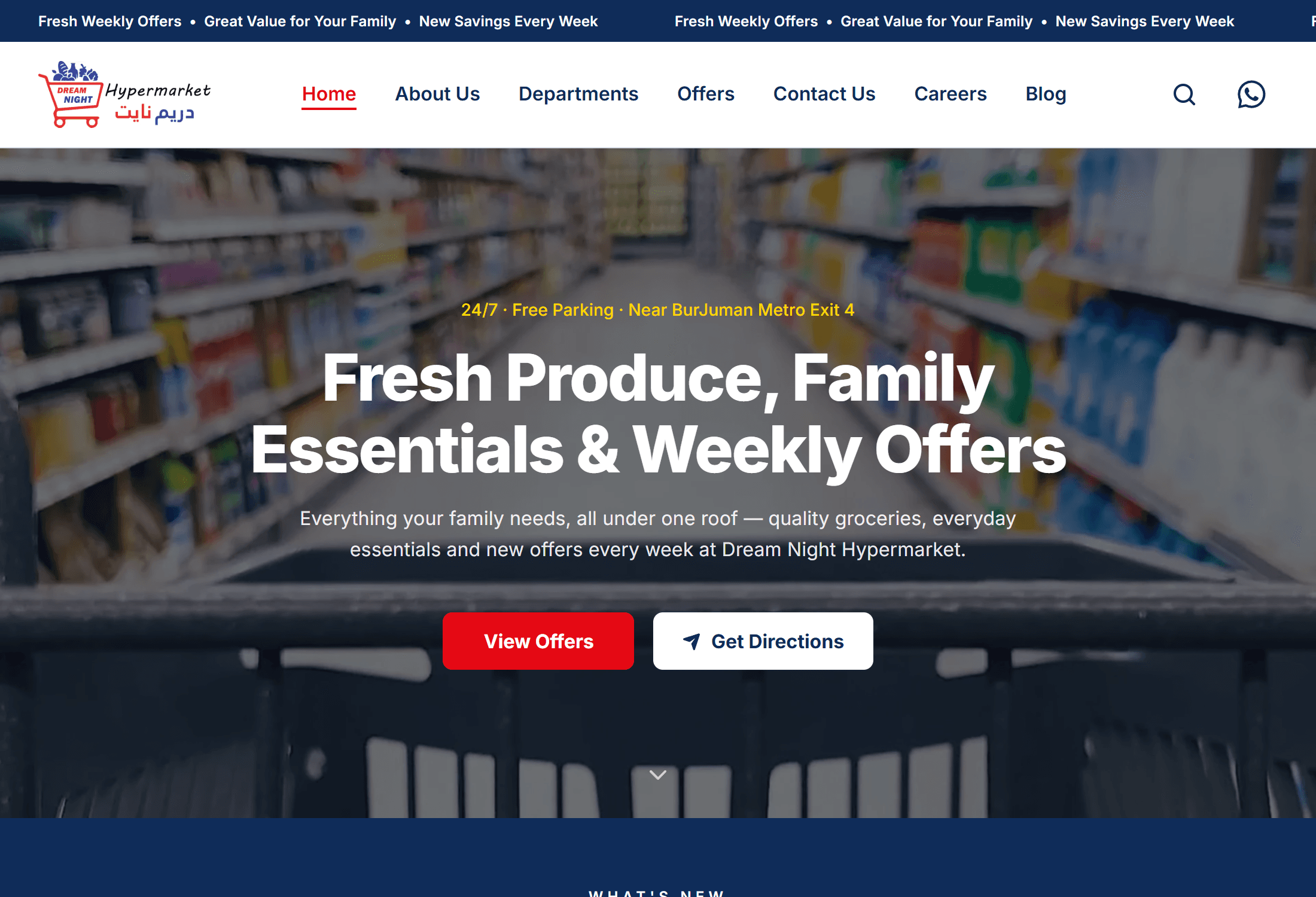
Dream Night Hypermarket is a 24/7 store in Al Hamriya, near BurJuman Metro. When we met it had no website, and its weekly offers reached customers one WhatsApp message at a time.
I built their first site in October 2025. It did its job, and it created a new problem: every price change, every new flyer, every photo came back to me as a message. A hypermarket’s promotions move faster than any developer answers messages.
So the rebuild had one requirement above all the others. The store had to be able to publish its own website.
From a website to a platform
I rebuilt the site in Next.js from the client’s Figma design, on a content platform of its own: an admin that lives inside the site itself, with the content in a Postgres database and the photographs and flyers in object storage.
Around nine in ten of their visitors arrive on a phone, so every page was designed and checked at phone width first, then scaled up to a desktop rather than the other way around.
I also wrote them a handbook. It explains every screen in the admin, in plain language, and says plainly which actions are dangerous. Handing over software without it is handing over a dependency.
What I built
The weekly offer, published by the store
The team uploads the flyer, writes a line about it, picks the dates and the departments it covers, and it is live. The form asks for nothing it does not need, because this is the job they do most often.
A flyer customers can actually read on a phone
The printed PDF becomes a page-turning reader with pinch to zoom, so a shopper sees the same offers the store prints without downloading anything or squinting at a flat page.
Offers that end themselves
Whether an offer is live is worked out from its dates every time a page is built, never stored. A job at midnight in Dubai refreshes the pages, so last week's prices leave the homepage on the stroke of the new day.
Twenty-five departments, careers and news
Everything the store wants to show is editable: departments, job vacancies and posts, each with its own search title and description, written by the people who know the business.
Their own logins, not a shared password
Every editor has a named account. When somebody leaves, their account goes and nothing else has to change. Unpublished drafts stay private, even to anyone guessing at the site's own API.
Measured, without collecting anyone's data
Tag Manager and GA4 are set up behind a consent banner, and the site never talks to an analytics platform directly. It announces what happened; nothing it sends identifies a visitor.
Found by people standing nearby
A hypermarket is a local business before it is anything else. Every page carries its own title and description, there is a page written for people searching near BurJuman, and the store’s address, hours, parking and directions are marked up so Google can read them as facts rather than as text on a page.
In store, QR codes take a shopper straight to the current offer on their phone, which closes the gap between the printed flyer on the shelf and the website.
The result
A store that started with no website now runs one itself: 25 departments online, a new weekly offer live in minutes, the printed flyer readable on any phone, and prices that retire themselves at midnight.
I removed my own recurring work on purpose. I would rather be the person they call about something that matters than the person standing between a business and its own price list.
More work
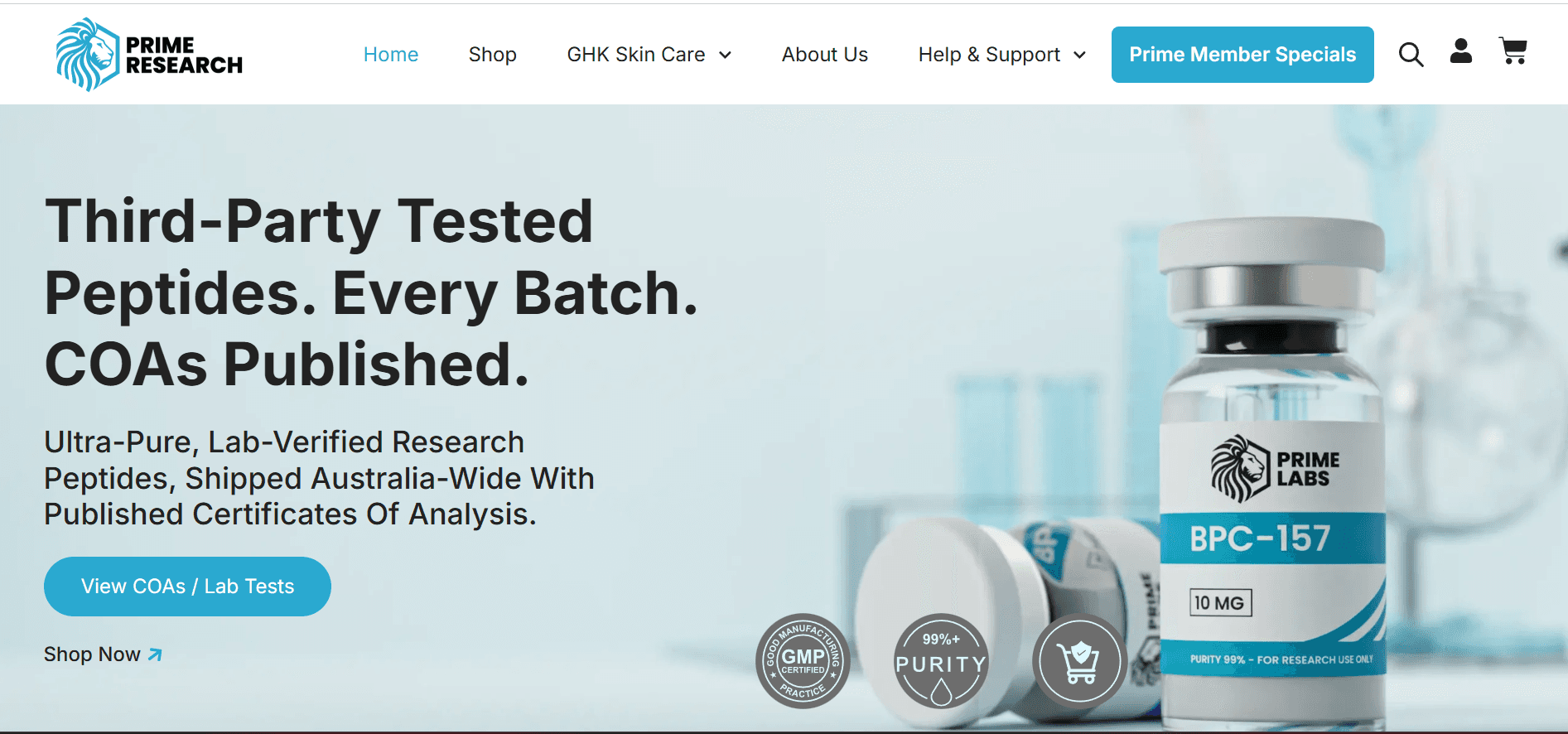
Prime Research
Australia
WooCommerce, WordPress, disaster recovery
Zerodata lost when their host shut the store down
Read the case study

Naqal Afash
Furniture moving, Saudi Arabia
WordPress, Google Ads, conversion tracking, Rank Math
286tap-to-call leads tracked
Read the case study

Blennex
Design agency, Pakistan
Next.js, React, performance
100mobile PageSpeed score
Read the case study
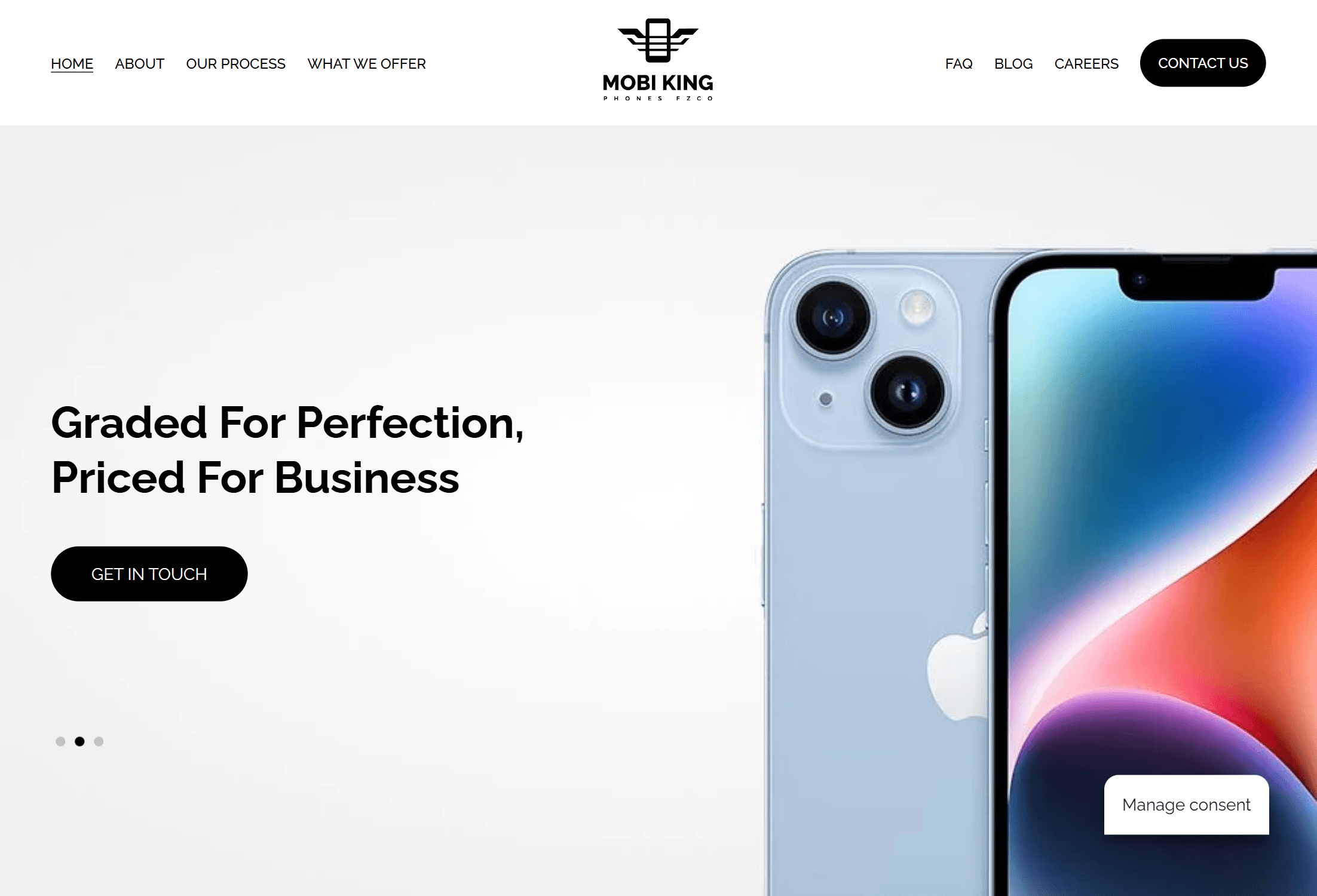
Mobikingfzco
iPhone Wholesale, UAE
WordPress, security, hosting migration
Closeda live security threat on the production site
Read the case study
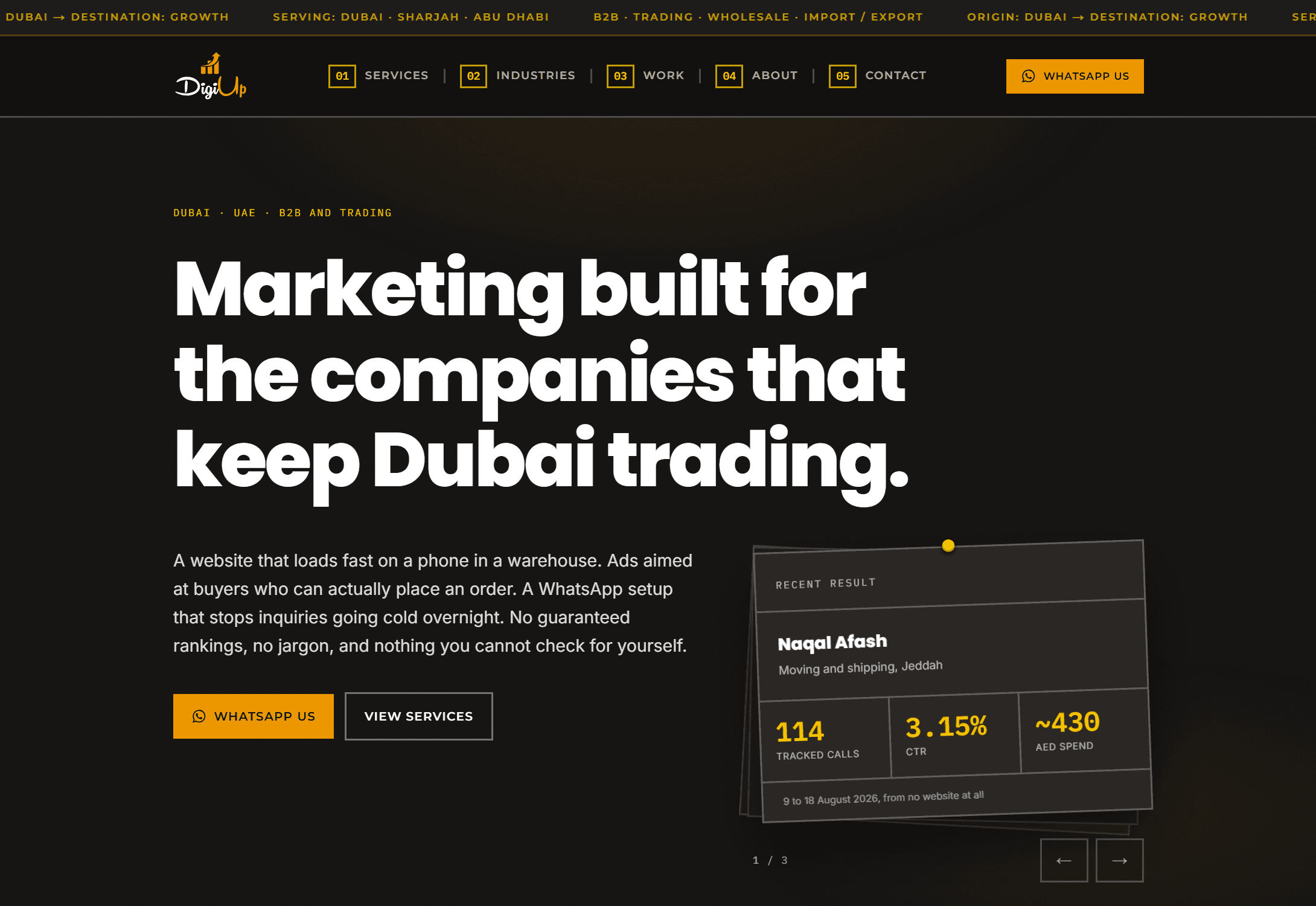
Digital Upscaling
Marketing agency, UAE
Next.js, brand design, mobile first, lead tracking
4 daysfrom first commit to live
Read the case study