Naqal Afash
A tap on a phone number is measurable. Whether it turned into a conversation is not. Most of this job was learning to be precise about that difference.
- Role
- Site build, SEO, ads and measurement
- Client
- Naqal Afash, Jeddah, Saudi Arabia
- Stack
- WordPress · Rank Math · Google Ads · Analytics
- Hosting
- Hostinger
Two things to build
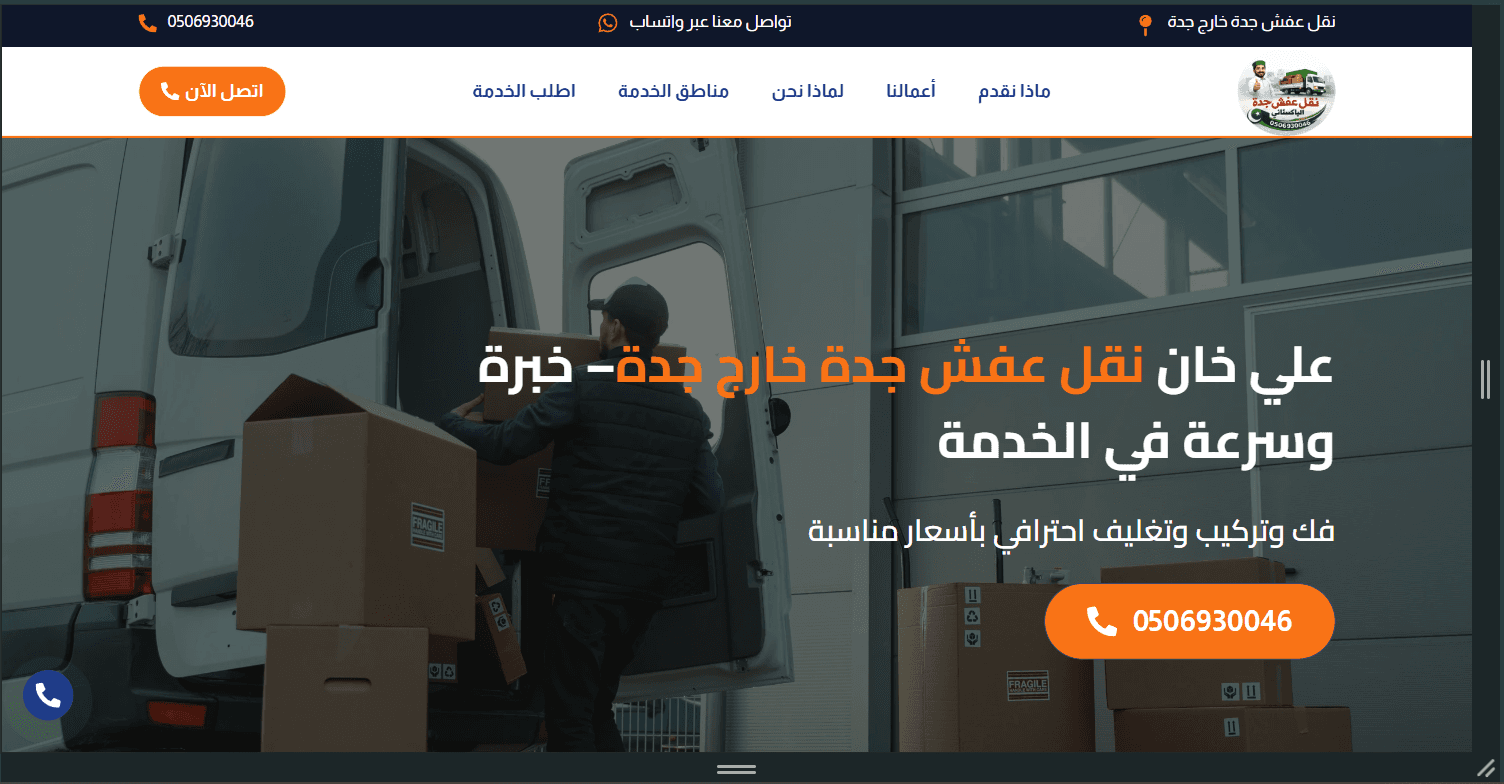
Naqal Afash moves furniture, household goods and office contents around Saudi Arabia, out of Jeddah. There was no site when I started, which settles the order of work on its own: an advert needs somewhere to land before there is any point buying one.
So there were two builds here, not one. The site, and then a way to know whether the money spent driving people to it came back. The second was the harder half, and it is the half this page is about.
Built for a thumb
96.7% of this traffic arrives on a phone. That figure is usually reported at the end of a project, as a fact about the audience. It belongs at the start, as a constraint on the build: the desktop layout is the edge case, and starting a call has to be possible from wherever a thumb happens to be.
There are four ways to begin one before scrolling. The number sits in the top bar, again as a call button in the navigation, again as the largest element in the hero, and again as a floating button that follows the scroll. On a desktop site that would read as repetition. On a phone, at five in the afternoon, with a van to book, it means the answer is never more than one thumb away.

The rest is unexciting on purpose. WordPress on Hostinger, organised around the service area rather than a generic list of services, with Rank Math handling titles, descriptions, heading structure and indexing. Ads are the fast channel; the SEO work is so the site is still worth something on the days the budget is off.
Why I threw away a month of numbers
The first campaign phase ran through July. It worked. Impressions came in, the phone rang, and the client was happy.
I could not tell you which advert produced which enquiry, and that is worse than it sounds. The problem is not that an unmeasured campaign might be failing. It is that a campaign that works and a campaign that does not look exactly the same from the dashboard when nothing is attributed. Every decision made on top of that — which keyword to raise, which to cut — is taste dressed up as analysis.
None of the July figures appear on this page. They were real enquiries and I have no way to stand behind them, so the smaller measured number is the one that gets published.
Choosing what to count
From the end of July I set up conversion tracking and Google Analytics against the one action this business actually runs on. Not a form, not a page view, not time on site. A moving company takes bookings by phone, so anything else measured here would be a proxy for the real thing, and proxies are what let a campaign look healthy while the phone stays quiet.
What is counted is the tap on the number, not the call. Those are not the same event and it is worth being blunt about the gap. A tap is a person deciding to ring, which is the strongest signal a site like this can produce; it is not proof that anybody answered, or that the conversation went anywhere. Connected calls would need call reporting on top, and that is not instrumented here.
Where it stands
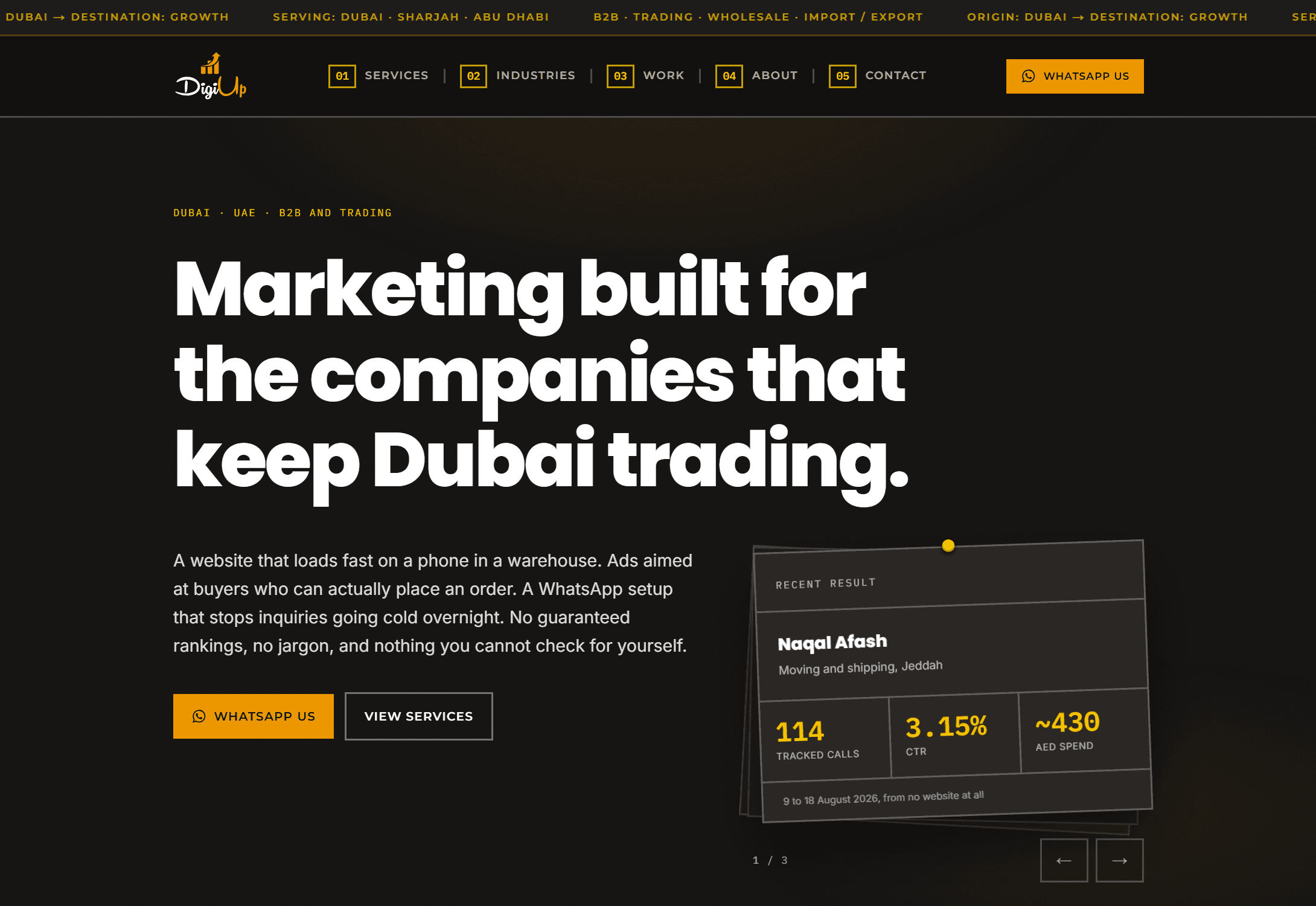
Ten days, 9 to 18 August 2026
- Clicks
- 121
- Spend
- SAR 438.88
- Click-through rate
- 3.15%
- Cost per click
- SAR 3.63
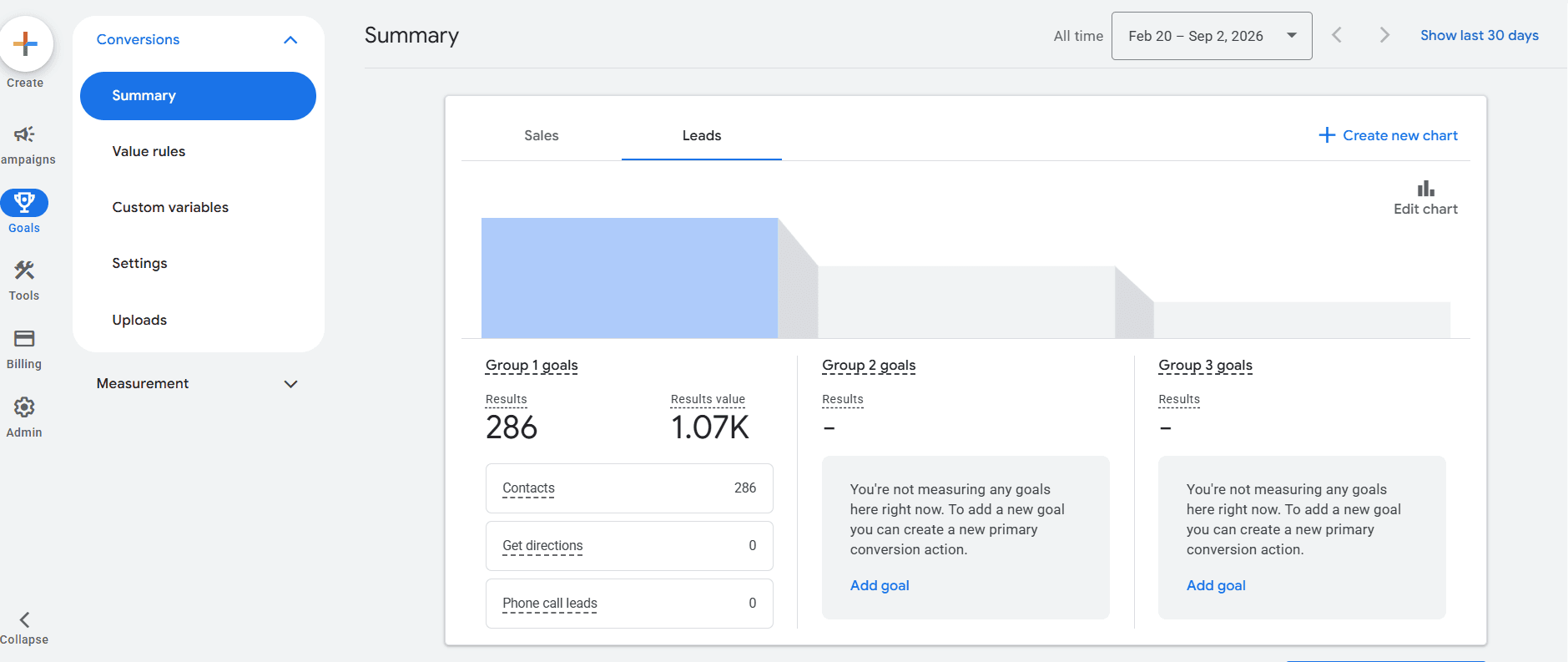
Account to date, 20 February to 2 September 2026
- Click-to-call taps
- 286
- Calls confirmed connected
- not instrumented

The range on that screenshot is the account’s whole life, but conversion tracking only existed for the last stretch of it, so the 286 accumulated over roughly five weeks rather than six months. The ad figures above cover ten days. The two do not divide into a conversion rate and are not offered as one.
The audience behind them is 96.7% mobile, concentrated in Jeddah, roughly 80% male, and busiest between 5 and 7pm — which is a scheduling instruction as much as a description.
The number worth noticing is not 286. It is that there is a number at all, and that I can tell you exactly what it does and does not mean. A month earlier the honest answer to how many enquiries the ads produced was that nobody knew.
What the keywords say
The five costliest keywords over those same ten days, sorted here by click-through rate rather than by spend. The distance between those two orderings is the whole argument.
| Keyword | Cost | Clicks | CTR |
|---|---|---|---|
| شركة نقل جدةmoving company, Jeddah | SAR 20.15 | 7 | 11.48% |
| شركة النقلtransport company | SAR 106.44 | 26 | 10.66% |
| خدمات النقلtransport services | SAR 90.80 | 25 | 9.23% |
| نقل عفشfurniture moving | SAR 96.54 | 20 | 6.31% |
| كراتين نقل عفشfurniture moving boxes | SAR 13.53 | 7 | 5.60% |
شركة نقل جدة is the only term here that names the city, and it has the best click-through rate of the five on the second smallest budget. نقل عفش, the broad head term, takes nearly five times that spend for a rate roughly half as good. That is the usual shape of a broad keyword and the usual argument for capping it.
The interesting one is كراتين نقل عفش. It means moving boxes — the cardboard itself. Somebody typing that wants to buy cartons, not hire a van. It is the worst performer on the list, and it is not underperforming so much as mismatched: no bid changes the fact that the person on the other end is shopping for something this business does not sell. That is a negative keyword, not a budget problem.

What I would do differently
Instrument first, then spend. The tracking took a fraction of the effort the campaign did and should have gone in before a single click was paid for. It is the same instinct as not deploying without logs, and I did not apply it early enough here.
The second thing is call reporting. Taps are a good signal and they are not the whole answer, and a business whose revenue arrives by phone should be able to see which adverts produced conversations rather than intentions.